
Dressed With Intention, Remembered With Reverence: What Samira Bawumia Teaches Us About Presence
Presence is not what you add when you arrive. It is what you have decided before you leave the house.
Samira Bawumia spent eight years in one of the most-watched positions on the African continent and gave us something no leadership curriculum formally teaches: presence as a strategy.
Let us talk about a woman who understood something that most leadership books bury in chapter eleven, if they mention it at all.
Your appearance is not decoration. It is communication. And communication, done deliberately, is power.
Samira Bawumia, the lawyer, humanitarian, founder of the Samira Empowerment and Humanitarian Projects (SEHP), Global Ambassador for the Clean Cooking Alliance, and Ghana’s former Second Lady, spent eight years scrutinised at state ceremonies, photographed at summits, filmed on campaign trails, in rural clinics, beside world leaders.
What she gave us in those eight years was a masterclass that no one formally put in the curriculum.
FIRST IMPRESSIONS
Before she said a word, she had already spoken
People form impressions before you open your mouth. The room decides things: trust, authority, warmth, readiness in the seconds before your first sentence. This is not vanity. This is neuroscience dressed in a good outfit.
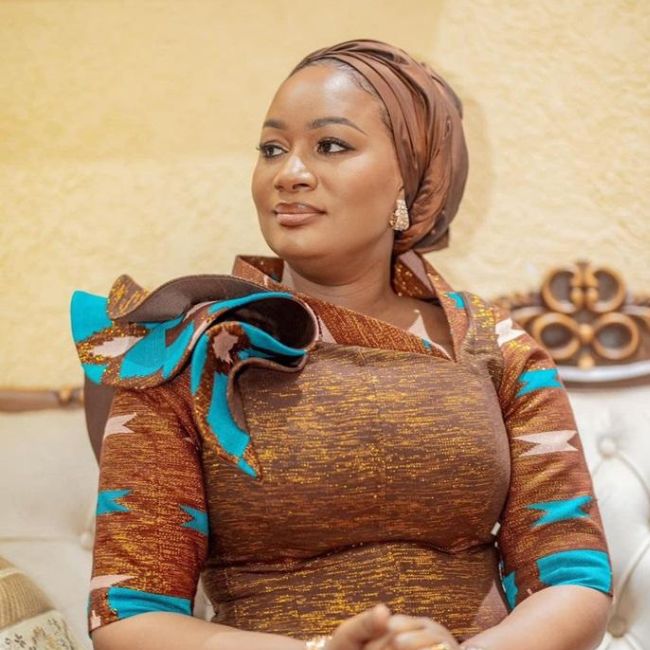
Samira Bawumia appeared to grasp this instinctively. At the 2020 swearing-in ceremony of President Akufo-Addo’s second term, her choice of a bold fugu look: vibrant, culturally anchored, impeccably finished, set social media alight. Not because it was flashy. Because it was intentional. It told a story in one glance: I belong here. I honour where I come from. And I am not small.
She didn’t dress for the occasion. She dressed for the message the occasion was meant to carry.
Anyone can dress for an event. The deliberate leader dresses as the statement.
The kente was not a costume; it was a declaration of cultural pride at a moment of national significance. It was strategic storytelling, worn on the body.
This is what we at WALANII call visual authority — the deliberate alignment between your image and the message your position requires you to send. It is not about fashion. It is about designing a signal that arrives before you speak and holds the room’s trust until you do.
CONSISTENCY
The quiet architecture of consistent presence
What sets Samira apart is not a single iconic moment. It is the consistency.
Presence is not a highlight reel. It is built in the accumulation of ordinary days, the Tuesday morning hospital visit, the campaign stop in the heat, the international forum at which you are the only woman who looks like you in the room.
Across eight years in public life, Samira wore creations from Ghanaian designers Pistisgh, Dumebi Couture, and Efia’s World not as a branding exercise, but as values made visible. Supporting local craftspeople. Championing African fashion on global stages. Showing that the continent does not need to borrow its aesthetic dignity from elsewhere.
Your wardrobe casts a vote every single day. The question is: do you know what you are voting for?
There is no neutral outfit, no off-duty from impression management when you are in a position of influence. The only choice is whether your uniform is deliberate or accidental.
African leaders are not invisible because they lack excellence. They are invisible because no one taught them to architect their presence for the rooms they deserve to own.
BLUEPRINT
How to build a personal brand as a leader in Africa: what Samira got right
The way Samira Bawumia constructed her public identity is not reserved for political spouses or heads of state. It is a blueprint available to every leader who is willing to be intentional.
1 MAKE YOUR VALUES LEGIBLE THROUGH YOUR CHOICES. Samira wore African designers. Every outfit made an argument. Personal brand for leaders starts with clarity about your values and then making those values consistently visible. A leader whose image and behaviour tell the same story creates trust faster than credentials alone ever could.
2 BUILD YOUR OWN PLATFORM ALONGSIDE YOUR ROLE. Samira was Ghana’s Second Lady and an independent humanitarian. Both were true simultaneously. The leaders who are most difficult to overlook are the ones who have built a presence that extends beyond their job description.
3 BE CONSISTENTLY, RECOGNISABLY YOURSELF. The most powerful thing Samira did across eight years was remain legible as herself regardless of the event, the pressure, or the audience. One impressive appearance is a moment. Twelve consistent months are a reputation.
4 DRESS YOUR AUTHORITY, NOT YOUR COMFORT LEVEL. As a leader, your image needs to reflect where you are going, not just where you are today. The way you present yourself signals how you see yourself and tells the room how to see you. This is not about spending more. It is about intention.
5 LET YOUR PRESENCE TRAVEL AHEAD OF YOU. In African professional environments, reputation moves through networks faster than CVs do. Samira’s presence was so consistently cultivated that her reputation arrived at every venue before she did. That is the goal.
LEADING FROM YOUR OWN GROUND
The spouse who leads from her own ground
There is a particular trap that political and executive spouses fall into: becoming an echo. A pleasant, well-dressed echo but an echo nonetheless.
Samira Bawumia refused that quietly and without drama. She built her own platform, her own programmes, her own voice. And then she showed up to support her husband’s campaign with that fullness intact.
Observers noted something interesting on the campaign trail: her presence humanised the candidate. Not because she played a supporting role, but because she was clearly a whole person playing her own role alongside him. That is an entirely different energy, and the public felt it.
At the NextGen Forum at the African Climate Summit in Ethiopia, attendees spoke of her “calm but powerful presence” and the way she held a room without filling it with noise. That is not an accident of personality. That is cultivated stillness: the rarest and most expensive-looking thing a person can wear.
Influence is not always loud. It can be soft-spoken, persuasive, and built on consistency, compassion, and credibility.
FREQUENTLY ASKED QUESTIONS
Questions on presence and personal brand
What is personal branding for leaders, and how is it different from self-promotion?
Personal branding is the deliberate, ongoing act of making your credibility, expertise, and values legible to the rooms that matter. It is not self-promotion, which implies performance for its own sake. Personal branding is a service: you have a perspective, experience, and capability that others in your field need. Making that visible is not arrogance. It is leadership.
Does personal brand matter for leaders who are not in public-facing roles?
Yes, perhaps more than for those who are. Leaders in internal or institutional roles often operate in environments where perception travels fast and through narrow channels: the board, the executive committee, the investor network. In these environments, a weak or inconsistent personal brand means you are being defined by others’ impressions rather than your own architecture.
How do I build a leadership presence that works across different cultural contexts?
The answer is not to code-switch your identity but to build a culturally fluent presence architecture: rooted in who you are and adaptable in how that communicates across contexts. Samira demonstrated this across state events, international summits, and campaign trails without ever appearing to be a different person. That is what integrated presence looks like.
What is the first step to building a deliberate leadership presence?
Clarity before visibility. Before you adjust your wardrobe, refine your LinkedIn profile, or accept a speaking invitation, understand where the gap currently sits between how you want to be seen and how you are actually being read.
How long does it take to build a recognisable personal brand as a leader?
Twelve months of consistent, intentional effort, a coherent visual identity, a clear professional voice, and deliberate visibility in the right rooms produce a measurable shift in how your network and industry perceive you. The compounding effect means that year two and year three move significantly faster.
CLOSING
The closing truth
Samira Bawumia graduated top of her MBA class at GIMPA. She holds a law degree from the University of London. She has spoken at the United Nations and represented Ghana on the global stage on climate, trafficking, and women’s health. She is, by any measure, an exceptionally accomplished woman.
And yet what people remember first before they look up her CV is the way she walked into a room. The calm. The clarity. The clothes that seemed to say: I know who I am, and I dressed accordingly.
Self-presentation is not about looking expensive. It is about being aligned with who you are, with where you are going, and with what you want the room to know before you open your mouth.
The most powerful thing you can do as a leader is to stop leaving your presence to chance. Study the women who do it well. Learn the grammar of deliberate style. And then dress the part you were born to play, not the part you have been handed.
Samira Bawumia already showed us how. The floor, as they say, is yours.
Ready to make your presence as deliberate as your ambition?

Presence is not what you add when you arrive. It is what you have decided before you leave the house.
Samira Bawumia spent eight years in one of the most-watched positions on the African continent and gave us something no leadership curriculum formally teaches: presence as a strategy.
Let us talk about a woman who understood something that most leadership books bury in chapter eleven, if they mention it at all.
Your appearance is not decoration. It is communication. And communication, done deliberately, is power.
Samira Bawumia, the lawyer, humanitarian, founder of the Samira Empowerment and Humanitarian Projects (SEHP), Global Ambassador for the Clean Cooking Alliance, and Ghana’s former Second Lady, spent eight years scrutinised at state ceremonies, photographed at summits, filmed on campaign trails, in rural clinics, beside world leaders.
What she gave us in those eight years was a masterclass that no one formally put in the curriculum.
FIRST IMPRESSIONS
Before she said a word, she had already spoken
People form impressions before you open your mouth. The room decides things: trust, authority, warmth, readiness in the seconds before your first sentence. This is not vanity. This is neuroscience dressed in a good outfit.
Samira Bawumia appeared to grasp this instinctively. At the 2020 swearing-in ceremony of President Akufo-Addo’s second term, her choice of a bold fugu look: vibrant, culturally anchored, impeccably finished, set social media alight. Not because it was flashy. Because it was intentional. It told a story in one glance: I belong here. I honour where I come from. And I am not small.
She didn’t dress for the occasion. She dressed for the message the occasion was meant to carry.
The kente was not a costume; it was a declaration of cultural pride at a moment of national significance. It was strategic storytelling, worn on the body.
This is what we at WALANII call visual authority — the deliberate alignment between your image and the message your position requires you to send. It is not about fashion. It is about designing a signal that arrives before you speak and holds the room’s trust until you do.
CONSISTENCY
The quiet architecture of consistent presence
What sets Samira apart is not a single iconic moment. It is the consistency.
Presence is not a highlight reel. It is built in the accumulation of ordinary days, the Tuesday morning hospital visit, the campaign stop in the heat, the international forum at which you are the only woman who looks like you in the room.
Across eight years in public life, Samira wore creations from Ghanaian designers Pistisgh, Dumebi Couture, and Efia’s World not as a branding exercise, but as values made visible. Supporting local craftspeople. Championing African fashion on global stages. Showing that the continent does not need to borrow its aesthetic dignity from elsewhere.
There is no neutral outfit, no off-duty from impression management when you are in a position of influence. The only choice is whether your uniform is deliberate or accidental.
African leaders are not invisible because they lack excellence. They are invisible because no one taught them to architect their presence for the rooms they deserve to own.
BLUEPRINT
How to build a personal brand as a leader in Africa: what Samira got right
The way Samira Bawumia constructed her public identity is not reserved for political spouses or heads of state. It is a blueprint available to every leader who is willing to be intentional.
LEADING FROM YOUR OWN GROUND
The spouse who leads from her own ground
There is a particular trap that political and executive spouses fall into: becoming an echo. A pleasant, well-dressed echo but an echo nonetheless.
Samira Bawumia refused that quietly and without drama. She built her own platform, her own programmes, her own voice. And then she showed up to support her husband’s campaign with that fullness intact.
Observers noted something interesting on the campaign trail: her presence humanised the candidate. Not because she played a supporting role, but because she was clearly a whole person playing her own role alongside him. That is an entirely different energy, and the public felt it.
At the NextGen Forum at the African Climate Summit in Ethiopia, attendees spoke of her “calm but powerful presence” and the way she held a room without filling it with noise. That is not an accident of personality. That is cultivated stillness: the rarest and most expensive-looking thing a person can wear.
FREQUENTLY ASKED QUESTIONS
Questions on presence and personal brand
What is personal branding for leaders, and how is it different from self-promotion?
Personal branding is the deliberate, ongoing act of making your credibility, expertise, and values legible to the rooms that matter. It is not self-promotion, which implies performance for its own sake. Personal branding is a service: you have a perspective, experience, and capability that others in your field need. Making that visible is not arrogance. It is leadership.
Does personal brand matter for leaders who are not in public-facing roles?
Yes, perhaps more than for those who are. Leaders in internal or institutional roles often operate in environments where perception travels fast and through narrow channels: the board, the executive committee, the investor network. In these environments, a weak or inconsistent personal brand means you are being defined by others’ impressions rather than your own architecture.
How do I build a leadership presence that works across different cultural contexts?
The answer is not to code-switch your identity but to build a culturally fluent presence architecture: rooted in who you are and adaptable in how that communicates across contexts. Samira demonstrated this across state events, international summits, and campaign trails without ever appearing to be a different person. That is what integrated presence looks like.
What is the first step to building a deliberate leadership presence?
Clarity before visibility. Before you adjust your wardrobe, refine your LinkedIn profile, or accept a speaking invitation, understand where the gap currently sits between how you want to be seen and how you are actually being read.
How long does it take to build a recognisable personal brand as a leader?
Twelve months of consistent, intentional effort, a coherent visual identity, a clear professional voice, and deliberate visibility in the right rooms produce a measurable shift in how your network and industry perceive you. The compounding effect means that year two and year three move significantly faster.
CLOSING
The closing truth
Samira Bawumia graduated top of her MBA class at GIMPA. She holds a law degree from the University of London. She has spoken at the United Nations and represented Ghana on the global stage on climate, trafficking, and women’s health. She is, by any measure, an exceptionally accomplished woman.
And yet what people remember first before they look up her CV is the way she walked into a room. The calm. The clarity. The clothes that seemed to say: I know who I am, and I dressed accordingly.
Self-presentation is not about looking expensive. It is about being aligned with who you are, with where you are going, and with what you want the room to know before you open your mouth.
The most powerful thing you can do as a leader is to stop leaving your presence to chance. Study the women who do it well. Learn the grammar of deliberate style. And then dress the part you were born to play, not the part you have been handed.
Samira Bawumia already showed us how. The floor, as they say, is yours.
Ready to make your presence as deliberate as your ambition?
Related posts